SPR places each WiFi device into its own VLAN with a unique password and a default-deny firewall policy. Devices are isolated from each other by default. You define connectivity through simple policies — not IP addresses and VLAN tags. Everything you don't explicitly permit is blocked.
No. SPR is built from scratch on Docker containers with nftables, CoreDNS, CoreDHCP, and hostapd. Every device gets its own VLAN and /30 subnet with a unique passphrase.
Yes. SPR supports WPA2 and WPA3 simultaneously. IoT devices that only support WPA2 work fine alongside WPA3 devices. iCloud Keychain WiFi password sharing is supported.
Yes. SPR is free and open source. Run it on a Raspberry Pi you already own, or deploy it as a VPN-only instance in Docker on any Linux box. There's a live UI demo you can try right now.
Stop your IoT devices from phoning home to servers you don't control. SPR keeps every device isolated and gives you full visibility into what's happening on your network.
SPR enforces per-device microsegmentation with policy-driven connectivity across multi-AP deployments. Programmable API for fleet management and integration with your existing security stack.
Three steps to a microsegmented network. No networking degree required.
Plug in the SPR router. Each device that joins WiFi gets a unique password and its own isolated VLAN automatically. Think in policy rather than VLAN tags, RADIUS, and subnets.
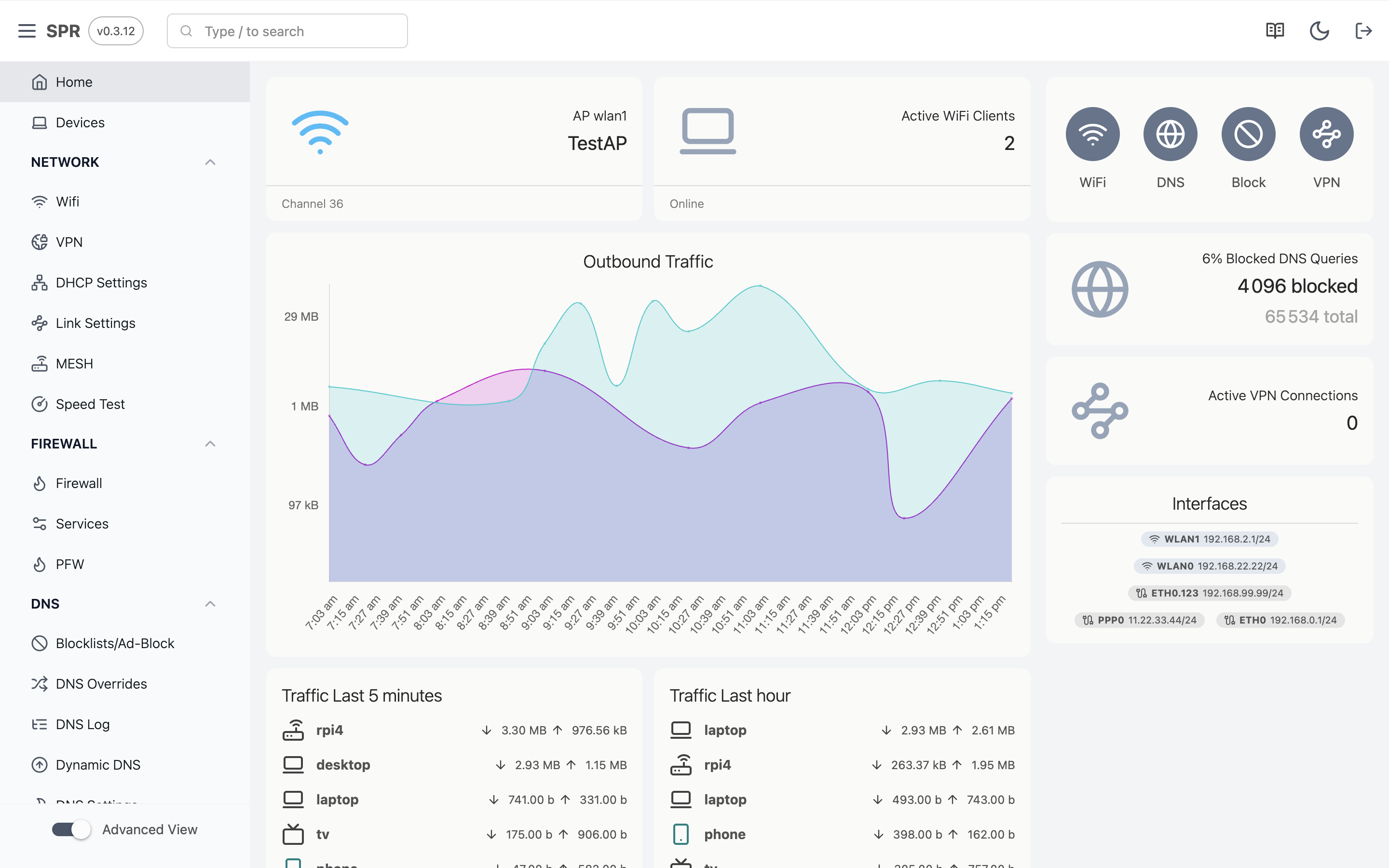
Set per-device firewall policies, DNS rules, and group permissions from the web dashboard. Block ads, restrict IoT devices, allow only what you choose. Schedule rules or set them by domain name.
Real-time DNS logs, traffic analysis, and authentication monitoring. See exactly what every device is doing. Get alerts when something looks wrong.
SPR's architecture proactively eliminated these vulnerability classes before knowledge of them became widespread.
A breakthrough NDSS 2026 paper demonstrated four attack vectors that break WiFi client isolation on every major router vendor: shared GTK abuse, gateway bouncing, port stealing via MAC spoofing, and broadcast reflection. SPR defends against all four through per-device VLANs, per-device GTKs, unique passwords, and coordinated L2/L3 firewall policy — shipped as defaults since 2022.
Read the full analysis →The MACStealer attack exploits how WiFi clients trust their access point's MAC-layer forwarding to steal frames from other clients on the same network. SPR's per-device VLAN architecture eliminates this entirely — there are no other clients on the same network to steal from.
Read the full analysis →Anvil Secure published research showing how spoofed IP packets exploit Linux conntrack state to bypass firewall rules on multihomed routers. SPR's interface-matched firewall architecture blocked the highest severity conntrack spoofing attacks out of the box.
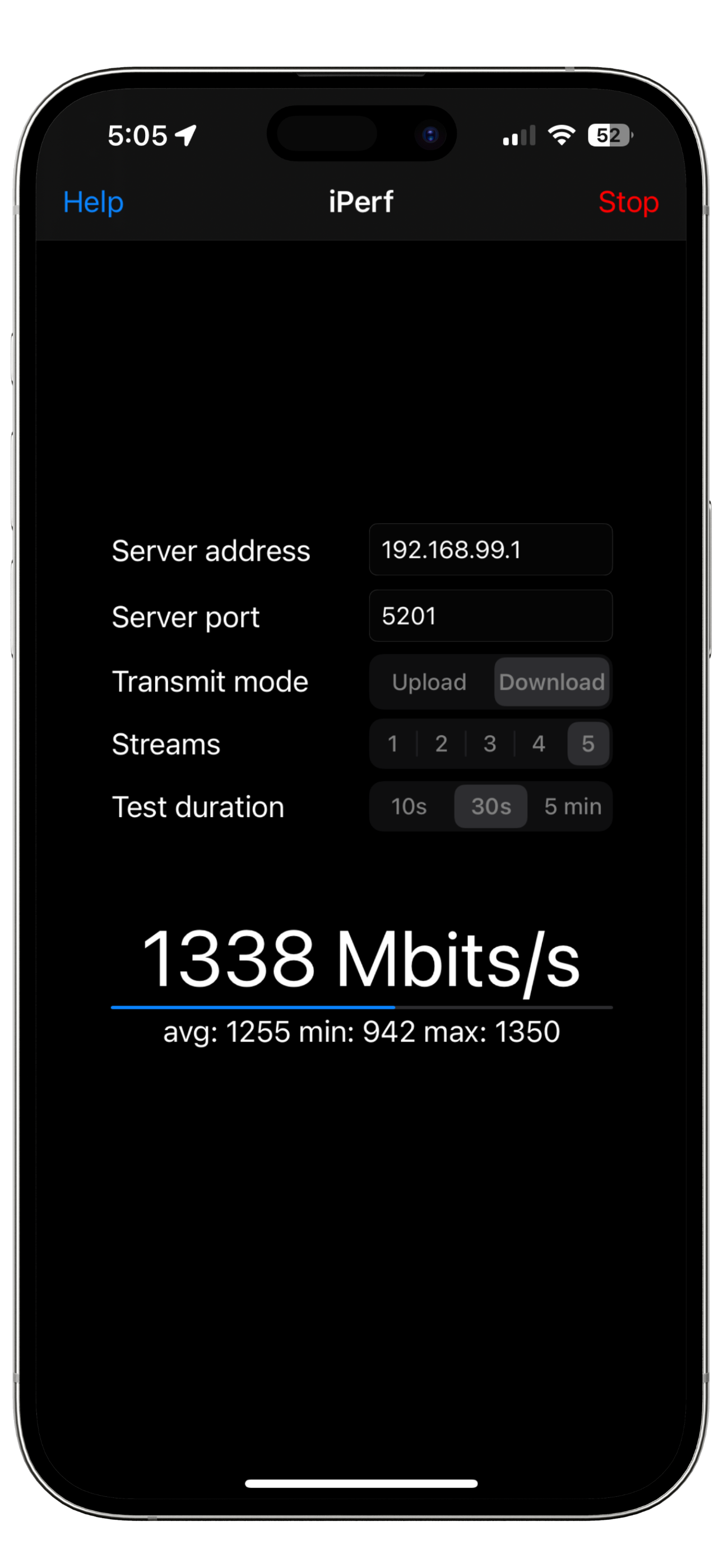
Read the full analysis →The most common concern with per-device VLANs: "won't that kill my throughput?" No. SPR handles inter-device routing at wire speed.
iPhone 15 speedtest on SPR WiFi 6 router (160 MHz, 5 GHz band).
The team actively discovers and publishes WiFi and kernel vulnerabilities. When we say a defense works, it's because we've battle-tested it.
Remote kernel code execution via SMB URL attacks in macOS. Multiple vulnerabilities in Apple's SMBClient kernel extension disclosed to Apple and published.
Memory corruption in Intel's Wireless Daemon via malformed WiFi beacon frames. Exploitable for ASLR bypass and potential code execution on Linux wireless stacks.
Analysis of conntrack-based spoofing attacks on multihomed Linux devices and the mitigations SPR implements to prevent them.
Analysis of leaked Chinese state-sponsored WiFi implant capabilities, hardware-based attack tools, and the defenses that actually stop them.
Go beyond the GUI. All functions and features of SPR are accessible via an API, allowing power users to not only programmatically define how the network connects, but pull detailed information about devices on the network.
Tools for hackers, penetration testers, and other explorers. SPR makes controlling and monitoring data flows on the network easier — making research into the functionality of devices and software on your network less cumbersome.
| Feature | SPR | Consumer Routers | Enterprise APs |
|---|---|---|---|
| Per-device WiFi passwords | ✓ | Limited | Limited |
| Automatic per-device isolation | ✓ | ✗ | Limited |
| Ad & tracker blocking | ✓ | ✗ | ✗ |
| Built-in WireGuard VPN | ✓ | ✗ | Limited |
| Per-device DNS & parental controls | ✓ | ✗ | Limited |
| Custom alerts & push notifications | ✓ | Limited | ✓ |
| Open source | ✓ | ✗ | ✗ |
| Self-hosted / no cloud dependency | ✓ | Limited | ✗ |
| Programmable REST API | ✓ | ✗ | Limited |
| Docker plugin ecosystem | ✓ | ✗ | ✗ |
$399
Enterprise-grade isolation at a fraction of the cost of traditional enterprise APs.
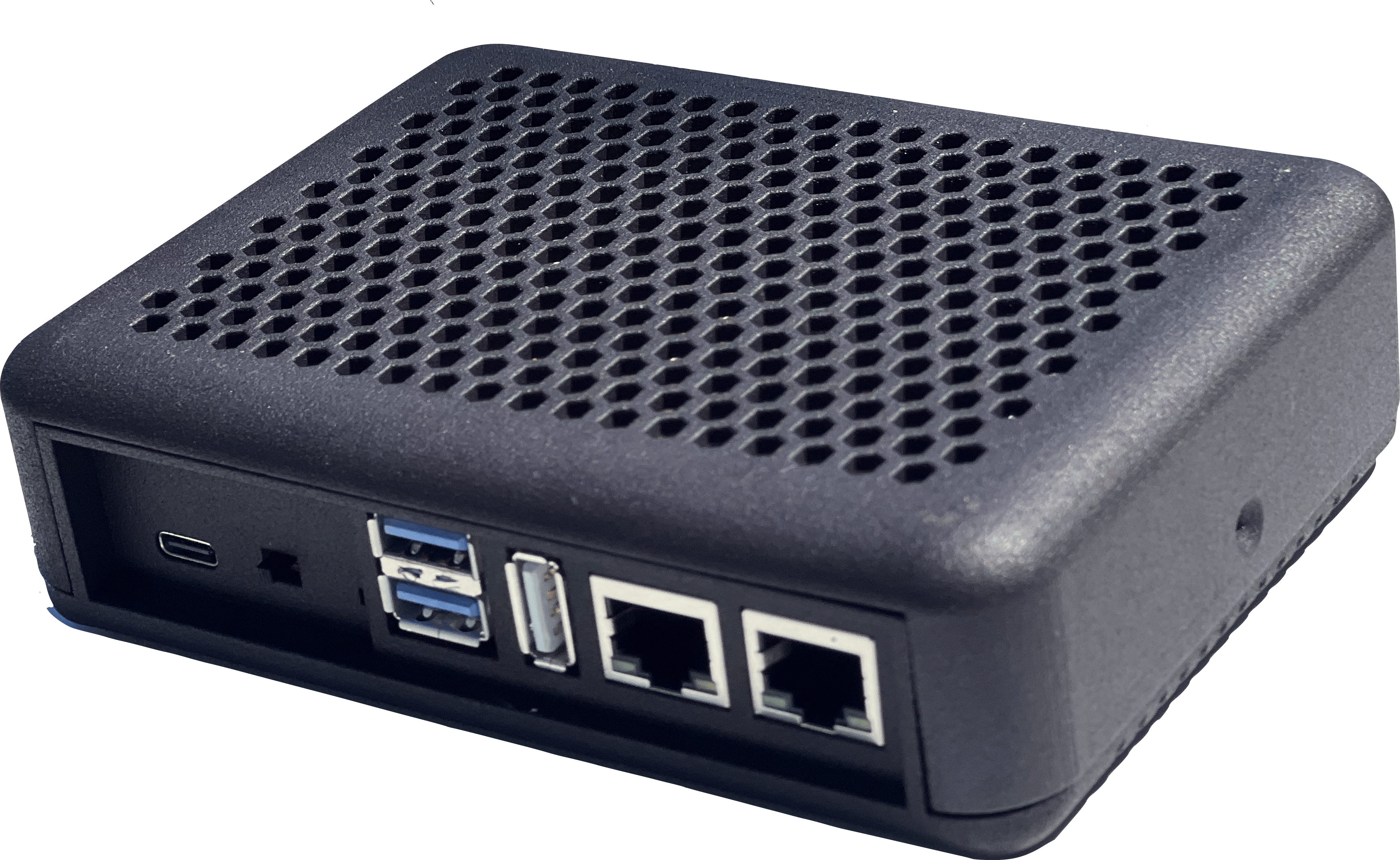
We offer hardware for running SPR and it can run on a wide variety of Linux systems that support Docker. Raspberry Pi4/5 and Compute Modules are widely tested.
Check out the setup guide. SPR is open source and can run in Docker containers as a cloud-only VPN or as a WiFi router.
Prebuilt containers are available for ARM64 and AMD64, OS Images are available for Raspberry Pi and ClearFog.
git clone https://github.com/spr-networks/super
cd super
bash base/setup.sh
docker compose up --pull always -d
This will manage the system network, firewall, and interfaces. Note: this replaces network manager, see the setup guide for details.
Also available on AWS Marketplace and DigitalOcean Marketplace.
Active open-source community, detailed documentation, and direct access to the team that builds SPR.